New Loans in the Economy

156 billion CZK
Current value
159 billion CZK
Last Month's Value

Commentary by the Czech Bar Association

The Czech Banking Association (ČBA) estimates that the volume of new loans actually signed or increased (excluding refinancing and rate resets) to the corporate sector and households reached approximately 19.4% of quarterly GDP during the second quarter of 2026, which is more than the 17.3% of GDP estimated for the first quarter of 2026. During the first half of 2026, Czech banks (on the supply side) and businesses and households (on the demand side) thus continued to boost the credit impulse to the economy. For now, it appears to be on a continued growth trajectory toward 18.3% of GDP, which is 3.2 percentage points above the 15.2% of GDP recorded in 2025 and 8.5 percentage points than the recent low of 9.9% in 2024. For comparison: the pre-COVID average for 2014–2019 was 18% of GDP.
The year-over-year recovery in the credit impulse in 2026 (based on data through June) of 3.2 percentage points reflects new housing loans (+1.1 p.p. to 5.3% of GDP; vs. 1.7% of GDP in 2023 and 3.8% in the pre-COVID period), as well as year-over-year growth in new corporate loans by 1.8 p.p. to 10.5% of GDP (vs. 6.4% of GDP in 2023 and 12.2% before the pandemic). Consumer loans have so far reached 2% of GDP this year, representing a year-over-year increase of 0.2 percentage points (vs. 1.4% of GDP in 2023 and 1.5% before the pandemic).

New Loans in the Economy

billion CZK

CBA Monitor
You can hide a data set by clicking on the data set name in the chart legend.

Source of Primary Data

CNB ARAD

Category

Loans and Deposits

Data Frequency

monthly

Note

These are net new loans, i.e., “truly new loans” (excluding refinancing and other arrangements), including loan increases (including increases resulting from refinancing and other arrangements).
The data in the chart are not adjusted for calendar and seasonal effects; however, the commentary reflects the Czech Banking Association’s (ČBA) estimate of seasonally adjusted data.
Total loans to nonfinancial corporations = CZK + EUR loans.
Total loans to households = consumer loans, housing loans, other (including nonresidential real estate).

For download:

Comments

Expect the CNB to hold in August—but keep a September hike to 4% on the radar

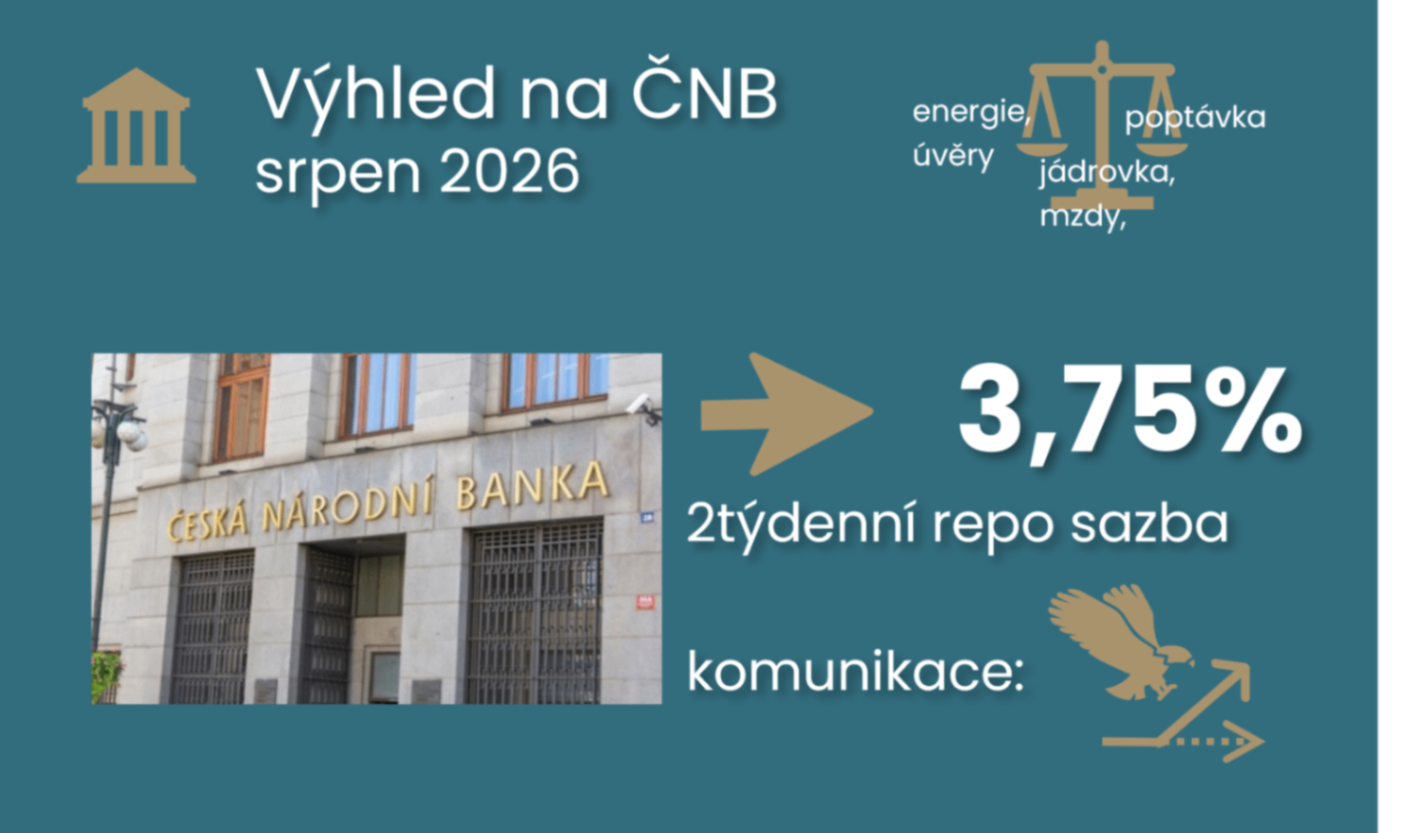
The CNB is likely to keep the two-week repo rate at 3.75% in August. However, the ECB’s wait-and-see approach is not a definitive guide for Czech monetary policy: domestic core inflation, the labor market, and lending activity are having a more inflationary effect. However, it is not just mortgages that are driving Czech lending; there is also a noticeable recovery in investment loans, which could ease inflationary pressures on the supply side. If service prices start rising again in July and August, the Bank Board may raise the rate to 4% on September 17. Markets are pricing in interest rate hikes by both the CNB and the ECB this fall.

Mortgage standards have tightened, but not only strong demand has mitigated the impact on lending conditions

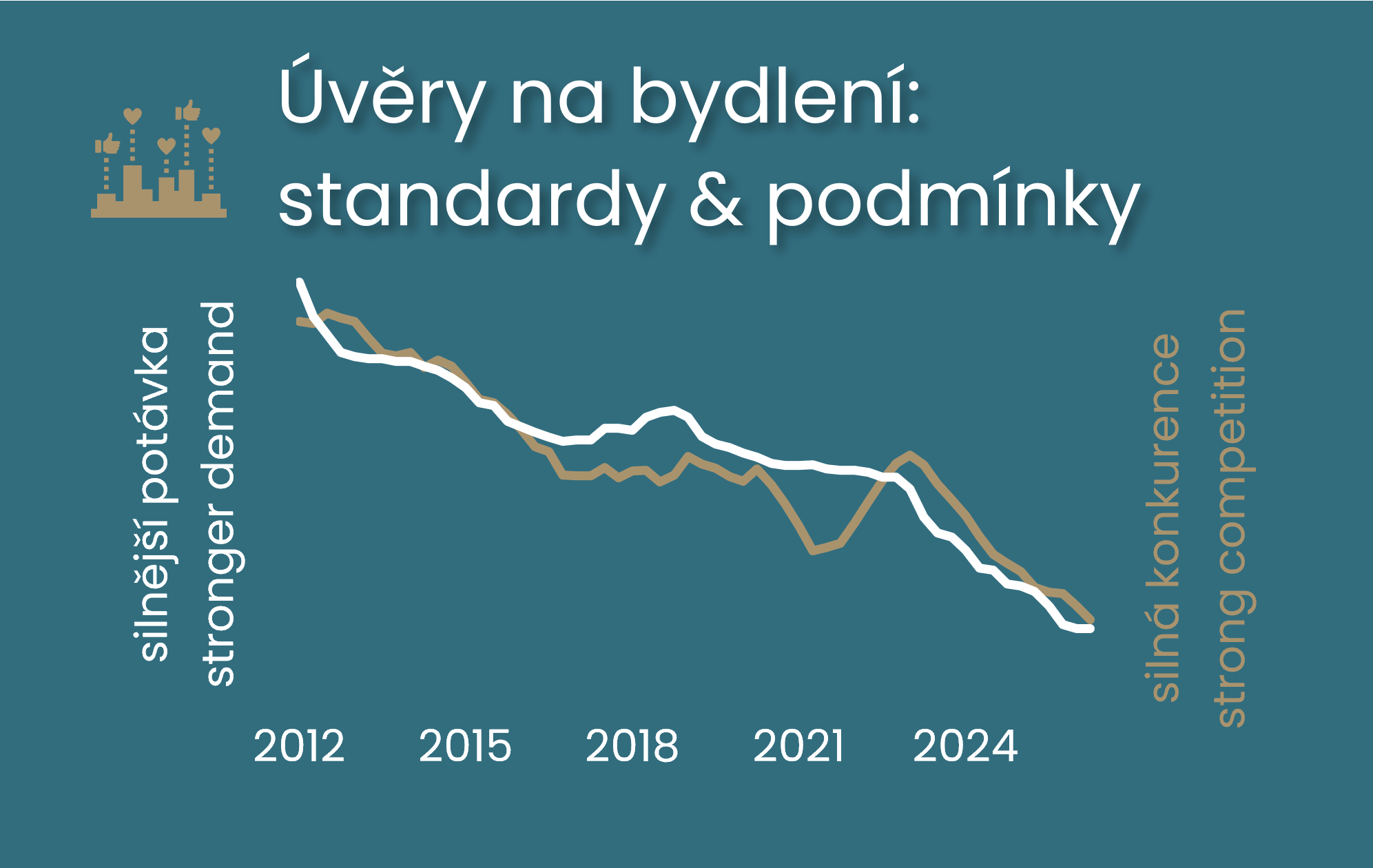
The CNB’s survey of banks’ lending conditions for the second quarter came as no surprise; the most significant change concerned housing loans. The central bank’s stricter criteria for investment mortgages tightened not only the banks’ lending requirements. In line with historical experience, this supported demand, likely temporarily. The impact on lending conditions was partially offset by lower bank margins and more favorable repayment terms. In an environment of continued strong competition, the stronger demand helped mitigate the impact of the spike in market interest rates on mortgage rates, which consequently rose more modestly. However, expectations of weaker demand for housing loans in the third quarter are changing this narrative. Surveys on consumer and business loans are also likely to keep the CNB’s outlook on the hawkish side.

CNB tightens banks' capital buffer. Responds to faster credit growth and new risks, including fiscal

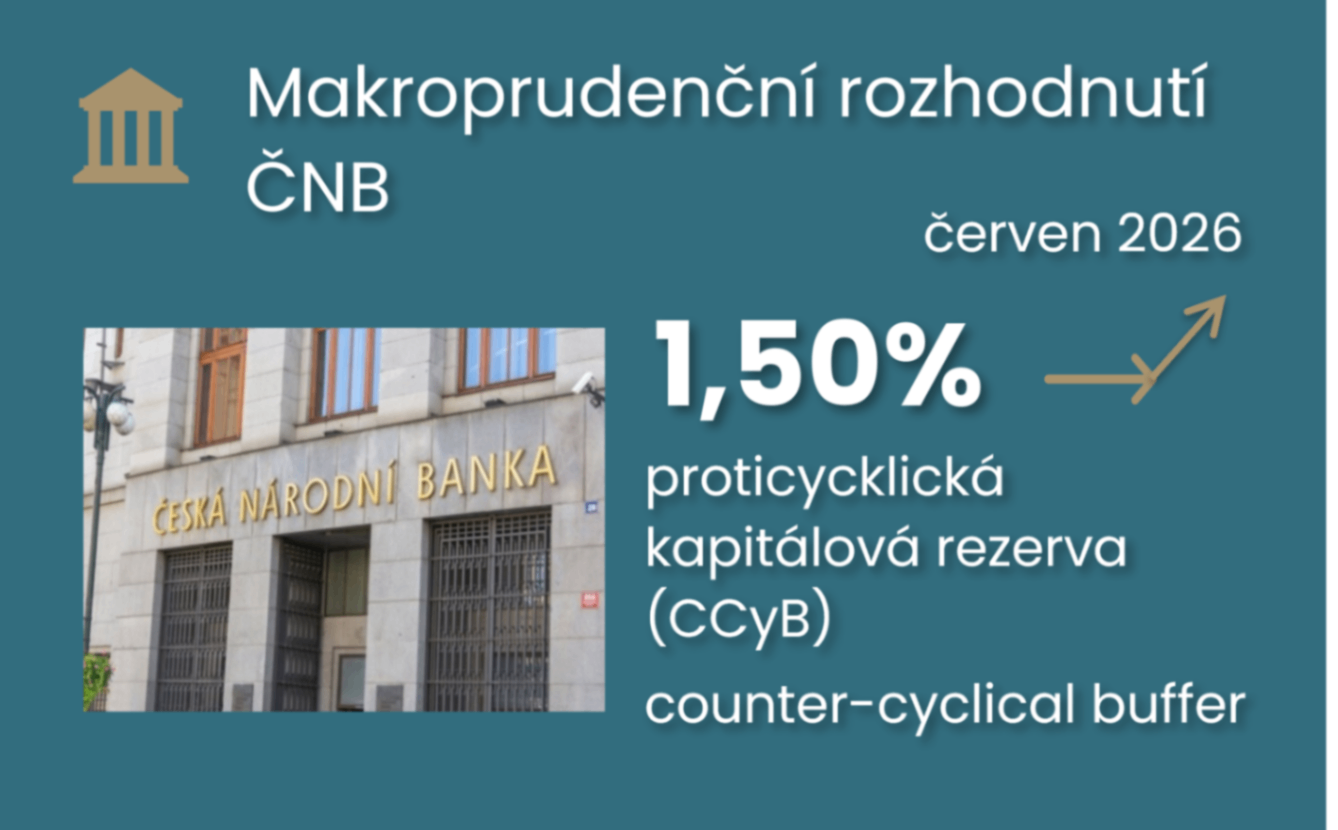
The countercyclical capital buffer should rise to 1.5% from July 2027, which will increase banks' total capital requirements to around 17% next year, in response to continued growth in lending to households and firms and lower perceived risks in the banking sector. Again, we are also seeing stronger wage growth outpacing productivity. In the case of rising investment credit, however, this is a dilemma for macroprudential policy. In addition to the financial cycle, the results of stress tests, including concerns about the interconnectedness of the banking and government sectors, are likely to have factored into the decision. It leaves mortgage rules unchanged.

Banking statistics for March 2026

Commentary by Miroslav Zámečník, Chief Advisor of the Czech Banking Association

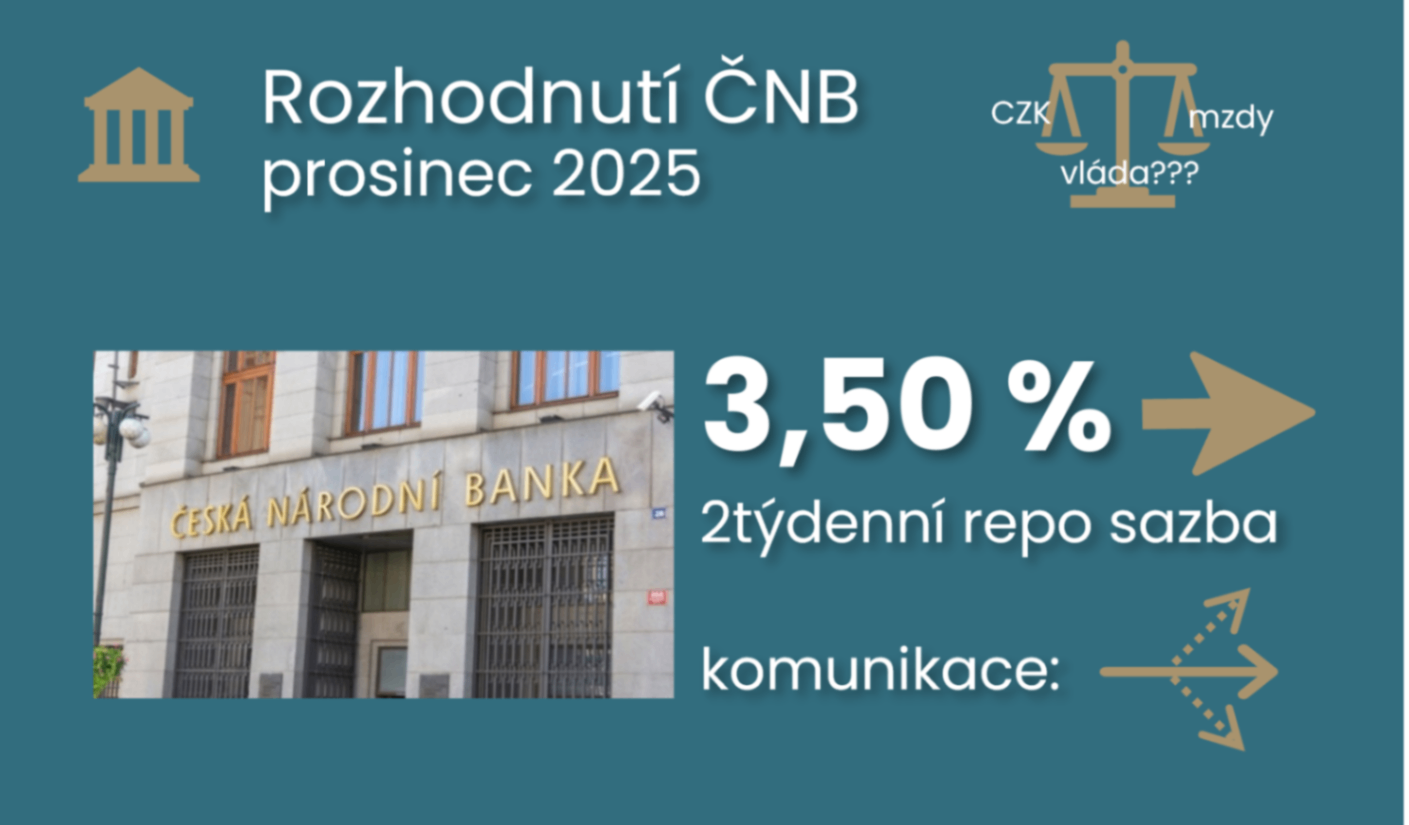
Is the unchanged CNB interest rate at 3.50% a sign of the coming bonanza or the calm before the storm?

Comment by Jaromír Šindel, Chief Economist of the CBA: The central bank did not surprise by unanimously leaving interest rates unchanged, i.e. with the two-week repo rate at 3.50%, for the fifth meeting in a row after a 25bp cut in May. Although the Board did not change its view of the risks and uncertainties surrounding the CNB's November forecast, it did assess the risks to inflation as balanced, given the risks in financial markets and the removal of the renewable energy levy, following November's upside assessment.

Banking statistics for August 2025

Commentary by Miroslav Zámečník, Chief Advisor of the Czech Banking Association

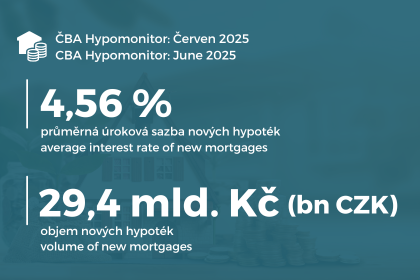
CBA Hypomonitor: Lower June rate to 4.56% brought a recovery in new mortgages

In June 2025, banks and building societies granted new mortgages worth CZK 29.4 billion.

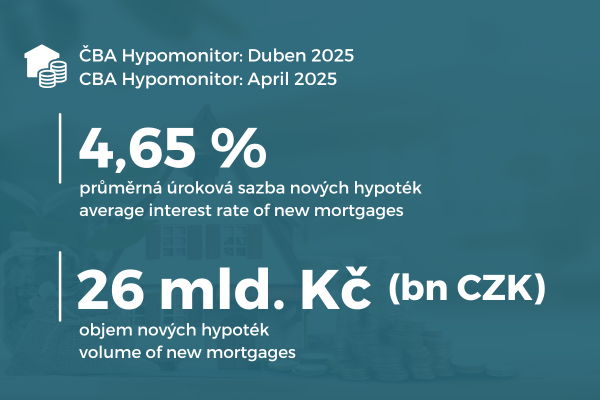
CBA Hypomonitor: April stabilized strong mortgage rates at 4.65%

Despite the slight correction, April continued to see strong volumes of new mortgages supported by another slight decline in the average mortgage rate to 4.65%.

Banking statistics for March 2025

Commentary by Miroslav Zámečník, Chief Advisor of the Czech Banking Association